


Published - 6th March 2026
If you’re running a business and constantly running out to buy toilet paper, you’re probably spending more than you need to. Buying in bulk means better prices and fewer orders to place every few weeks. With Nova Tissue, pallet buying has become a practical, cost-saving option for businesses of all sizes.
This guide explains how pallet buying works, what it costs, and whether it makes sense for your business. We’ll look at prices, storage requirements, and help you figure out if this approach could save you money and hassle.
How Toilet Paper Pallets Work
What You Actually Get
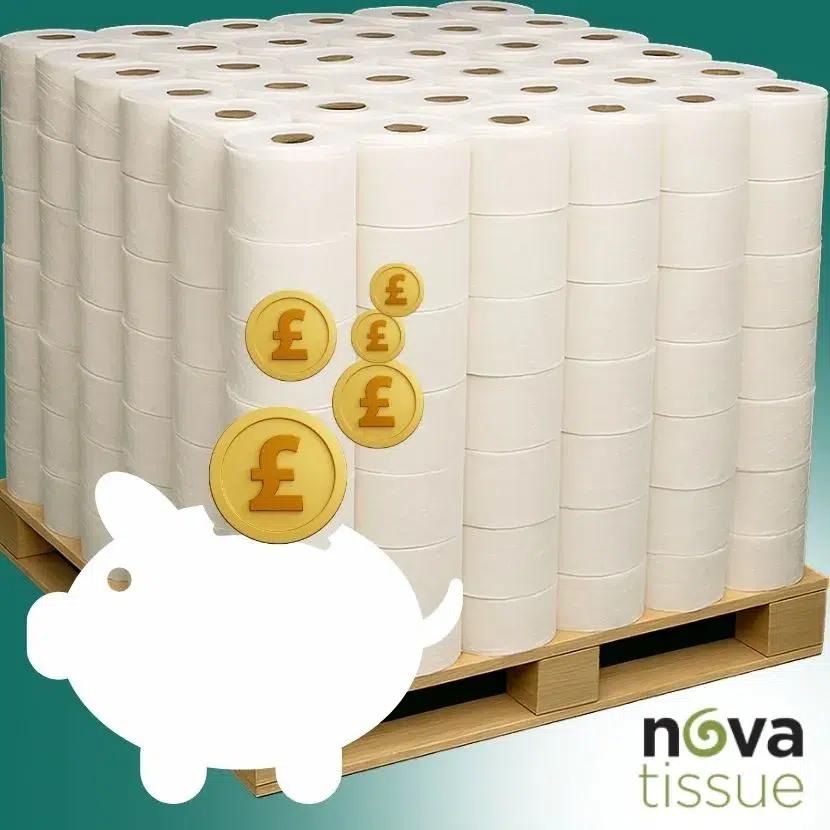
A toilet paper pallet isn’t just a big box, it’s a proper delivery on a wooden pallet base. Depending on which option you choose, you might get anywhere from 114 packs to 600 packs in one delivery.
Here’s what’s currently available from Nova Tissue:
3-ply options (softer, more absorbent):
- 114 packs of 24 rolls each – £500 including VAT
- 240 packs of 9 rolls each – £400 including VAT
- 600 packs of 4 rolls each – £500 including VAT
2-ply options (good quality, lower cost):
- 126 packs of 18 rolls each – £350 including VAT
- 600 packs of 4 rolls each – £420 including VAT
Special quick-dissolving type:
- 600 packs of 4 rolls each – £840 including VAT
The Real Cost Difference
Let’s be honest about the numbers. If you’re buying toilet paper from a regular supplier or cash-and-carry, you’re probably paying around £1.50 per 4-pack. With pallet deals, that same 4-pack costs between £0.70 and £0.83.
For a business using 600 packs per year, that’s the difference between spending £900 and spending £420-500. The savings are real, and they add up quickly.
Working Out What You Need
Calculating Usage
Most businesses use about 8 rolls per employee per month. If you get visitors or customers using your facilities, add roughly 0.25 rolls per person per day.
So for an office with 25 employees and about 15 visitors daily:
- Staff usage: 25 × 8 = 200 rolls monthly
- Visitor usage: 15 × 0.25 × 22 working days = 83 rolls monthly
- Total: 283 rolls (about 71 packs of 4)
This means you’d go through a pallet in about 8-9 months, depending on which size you choose.
Choosing Pack Sizes
Smaller packs (4 rolls) are easier to distribute around your building and store in individual toilets. Larger packs (18-24 rolls) give you better value but need more storage space in each location.
Think about your building layout. If you have several floors or separate areas, smaller packs might be more practical even if they cost slightly more per roll.
Storage Requirements
Space and Setup
A standard pallet takes up about 1.5 square metres of floor space. You’ll need at least 2.5 metres of ceiling height if you want to stack pallets, though most businesses keep them at ground level.
The main thing is keeping the toilet paper dry. A damp warehouse or storage room will ruin your investment quickly. Room temperature is fine, you don’t need special heating or cooling.
Handling the Delivery
When your pallet arrives, you’ll need either a pallet jack or a forklift to move it. Drivers can deliver pallets to ground-floor storage areas, but they won’t carry individual packs upstairs.
If you don’t have handling equipment, you can break down the pallet at the delivery point and move the stock manually. It takes some time, but it’s easy enough with a couple of people helping.
Different Business Needs
Office Environments
Offices usually prefer 3-ply toilet paper because it feels more professional and comfortable for staff. The extra cost is often worth it for employee satisfaction.
Manufacturing and Warehouses
Industrial sites often do fine with 2-ply options. The focus is on value and reliability rather than luxury. The money saved can be significant over a year.
Customer-Facing Businesses
If customers use your facilities, you want decent quality toilet paper that reflects well on your business. Poor quality creates a bad impression that’s hard to overcome.
Special Requirements
Some businesses need quick-dissolving toilet paper for septic systems or sensitive plumbing. It costs more upfront but prevents expensive blockages and maintenance calls.
Making the Switch
Getting Started
Don’t jump straight into pallet buying without testing the waters. Start by calculating your actual usage over 4-6 weeks. Many businesses guess wrong about how much they use.
Check your storage situation. Can you actually store a pallet safely and conveniently? Do you have equipment to move it around?
First Order Considerations
Your first pallet order should be conservative. Don’t order six months’ worth of stock until you know how quickly you actually go through it. Start with a three-month supply and adjust from there.
Most businesses find their consumption varies more than expected. New employees, busy periods, or changes in building occupancy can all affect usage.
Common Mistakes to Avoid
Storage Problems
The biggest mistake businesses make is not thinking through storage properly. Toilet paper needs to stay dry, but it also needs to be accessible. Don’t put your pallet in a corner where you can’t reach it easily when you need to restock facilities.
Ordering Too Much
It’s tempting to order huge quantities when the savings look good but toilet paper doesn’t go bad, it just takes up space. Order what you can realistically store and use within 6-12 months.
Ignoring Seasonal Changes
Many businesses see usage spikes during winter (people spend more time indoors) or during busy trading periods. Factor these patterns into your ordering schedule.
Poor Staff Communication
Make sure your team knows where stock is stored and how much you have. Nothing’s worse than emergency buying expensive toilet paper when you have boxes sitting in storage that nobody knew about.
What UK Businesses Are Actually Saving
Where the Savings Come From
The savings aren’t just about bulk pricing. When you buy pallets, you also save on:
- Delivery charges (eliminated with free mainland delivery)
- Staff time spent placing frequent orders
- Emergency purchases at premium prices
- Administrative overhead from processing multiple invoices
Practical Considerations for UK Businesses
Delivery Logistics
The delivery truck needs reasonable access to your premises, tight car parks or narrow lanes can cause problems.
Delivery drivers will expect someone to be available to receive and sign for your order, but they typically won’t help move boxes or distribute stock inside your building. Make sure you’ve got the right people or equipment ready when your delivery is scheduled to arrive.
Payment and Accounts
We offer monthly payment accounts for established businesses to help with cash flow, particularly useful for smaller companies that may find large upfront payments challenging.
We also provide extended payment terms (30–60 days) to make the switch to pallet orders more financially manageable.
Beyond Mainland Delivery
If you’re in Scotland’s islands, Northern Ireland, or other areas outside the mainland network, delivery is still possible but usually costs extra. Get quotes that include all delivery charges upfront.
Making the Numbers Work
Break-Even Calculations
For most businesses, pallet buying makes sense if you use more than 200 rolls per month. Below that, the storage and handling might not justify the savings.
Calculate your monthly usage, multiply by 12, and compare annual costs between your current buying method and pallet deals. Include all costs from storage, handling time, and any equipment you might need.
Cash Flow Impact
Pallet buying means larger, less frequent payments instead of regular smaller ones. For businesses with tight cash flow, this might require planning around other major expenses.
However, the overall annual cost reduction usually more than compensates for the timing adjustment.
Conclusion
Buying toilet paper by the pallet isn’t the right fit for every business, but for many UK companies, it can offer significant savings with minimal hassle. The key is doing your homework, from calculating your likely usage, ensuring you have adequate storage, and choosing a reliable supplier like Nova Tissue.
Pallet deals can reduce the frequency of orders, simplify stock management, and help businesses control ongoing costs. By planning properly, you can make the switch in a way that fits your operations and budget.
If you’re currently buying toilet paper in small quantities and find it an ongoing expense, it’s worth considering pallet orders. Estimate your usage, review your storage options, and see what Nova Tissue can provide.
The worst case? You find it doesn’t suit your setup. The best case? You discover a practical way to cut recurring costs while improving your supply reliability.